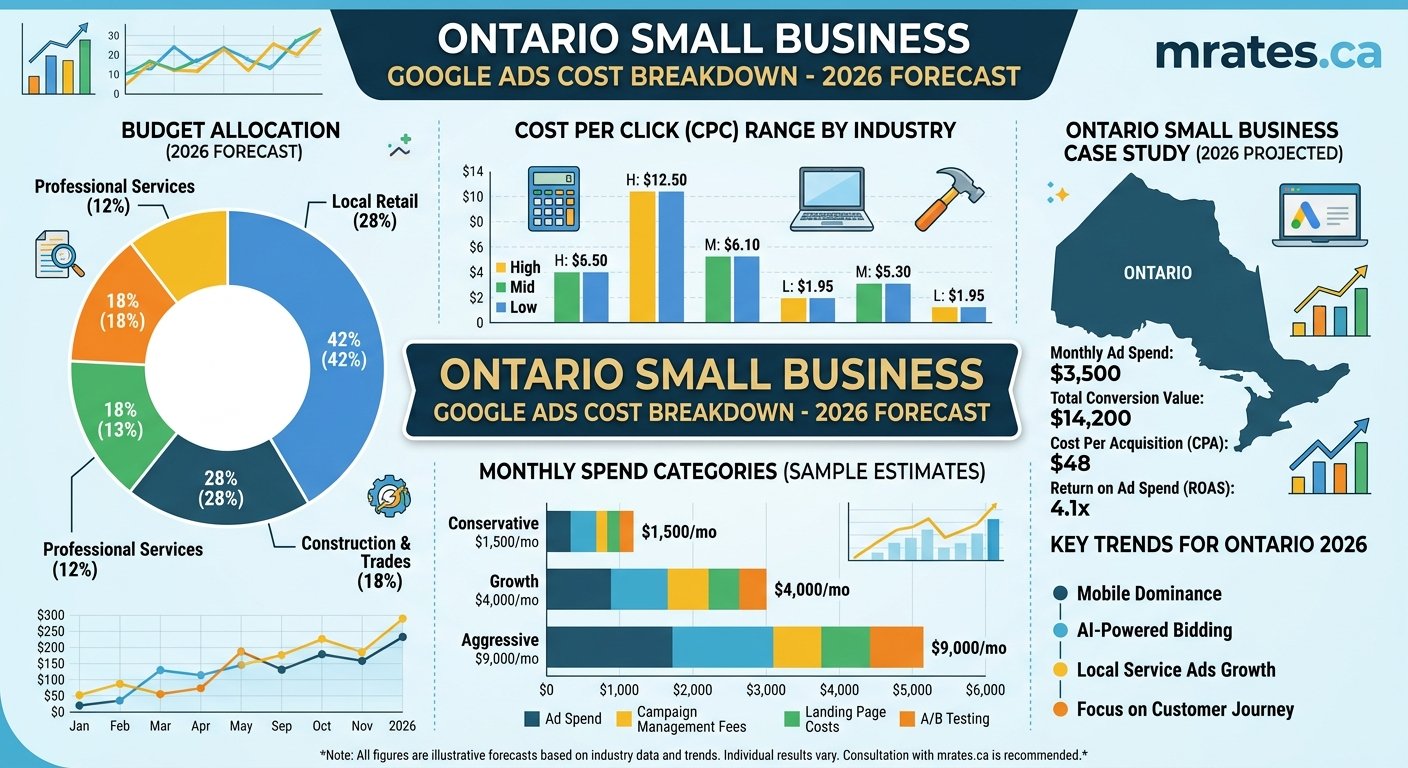

Google Ads management is where a lot of small business budgets quietly leak. Running ads is easy to start and hard to run well, and the difference shows up directly in how many leads you get for the same spend.
If you are a business owner in the GTA weighing whether to run ads yourself or hand them off, this guide covers what good management looks like and the numbers that tell you it is working.
What Google Ads management really involves
Google Ads management is the ongoing work of planning, building, and tuning paid search campaigns so that spend turns into customers. It is not a set-and-forget task.
The work starts with keyword research and account structure, moves into writing ads and building landing pages, and then becomes a steady loop of reviewing what converts and cutting what does not.
The platform rewards accounts that feed it clean conversion data and clear goals. Without that, Google’s automation optimizes toward clicks that may never become leads.
Why most DIY campaigns underperform
The common pattern is a business owner setting up a campaign in an afternoon, picking broad keywords, and letting it run. Within weeks the budget is gone and the leads are thin.
Broad match keywords without negatives pull in searches that have nothing to do with the service. You end up paying for clicks from people who were never going to buy.
Weak landing pages are the other half of the problem. Sending paid traffic to a generic homepage instead of a focused page with one clear action wastes most of the click.
Google’s own help centre explains match types and account basics well, and it is worth a read before you spend, available on Google Ads Help.
The metrics that matter in Google Ads management
Clicks and impressions are easy to look at and mostly a distraction. The numbers that decide whether ads pay off sit deeper.
Cost per lead tells you what each enquiry costs. Conversion rate tells you how well your ad and page turn clicks into enquiries. Together they show whether the account is healthy.
Return on ad spend ties it to revenue. If every dollar in brings back several dollars of business, you scale. If it does not, you fix the account before adding budget.
Benchmarks vary widely by industry, and resources like WordStream publish ranges that help you sanity-check your own cost per click and conversion rate.
How to structure an account that converts
Group keywords tightly. A campaign with narrow ad groups, each built around one service and one intent, lets you match the ad and the landing page to what the person searched.
Add negative keywords from day one and keep adding them. Blocking irrelevant searches is one of the fastest ways to lower wasted spend.
Point each campaign at a dedicated landing page. One headline, one offer, one form or phone number, and nothing that pulls the visitor sideways.
Set up conversion tracking before you spend a dollar. Call tracking and form tracking turn the account from guesswork into something you can actually steer.
What good Google Ads management costs
Budgets in Ontario vary by trade, but a focused local campaign can start small and still generate leads if it is built tightly. Many service businesses run on a few hundred dollars a week once the account is dialled in.
Management fees sit on top of ad spend. The value of paying for management is simple: a well-run account usually lowers cost per lead enough to cover the fee and then some.
The test is not the fee in isolation. It is whether your cost per lead and total leads improve after someone takes over the account.
Common questions about running Google Ads
How much should a small business spend to start?
A tightly built local campaign can start on a few hundred dollars a week and still produce leads. The structure matters more than the size of the budget.
Why are my ads getting clicks but no leads?
Usually the landing page or the targeting. Broad keywords without negatives pull the wrong traffic, and a generic page fails to convert the clicks you do get.
What is a reasonable cost per lead?
It depends heavily on the industry. The right benchmark is your own trend over time, with the aim of lowering cost per lead while holding lead quality steady.
How often should the account be reviewed?
Weekly at a minimum. Paid search drifts if left alone, and regular pruning of wasted spend is where most of the gains come from.
When to hand off your Google Ads management
If you are spending real money and cannot say what a lead costs you, that is the signal. An account running blind is an account leaking budget.
The same goes if you are stretched too thin to review the account weekly. Paid search needs regular attention, and neglect shows up fast in the results.
Webtech Analyst builds and runs Google and Meta ad campaigns for Ontario businesses, with conversion tracking and lead-focused reporting baked in. You can book a free ad account audit to see where your spend is going and what to fix first.