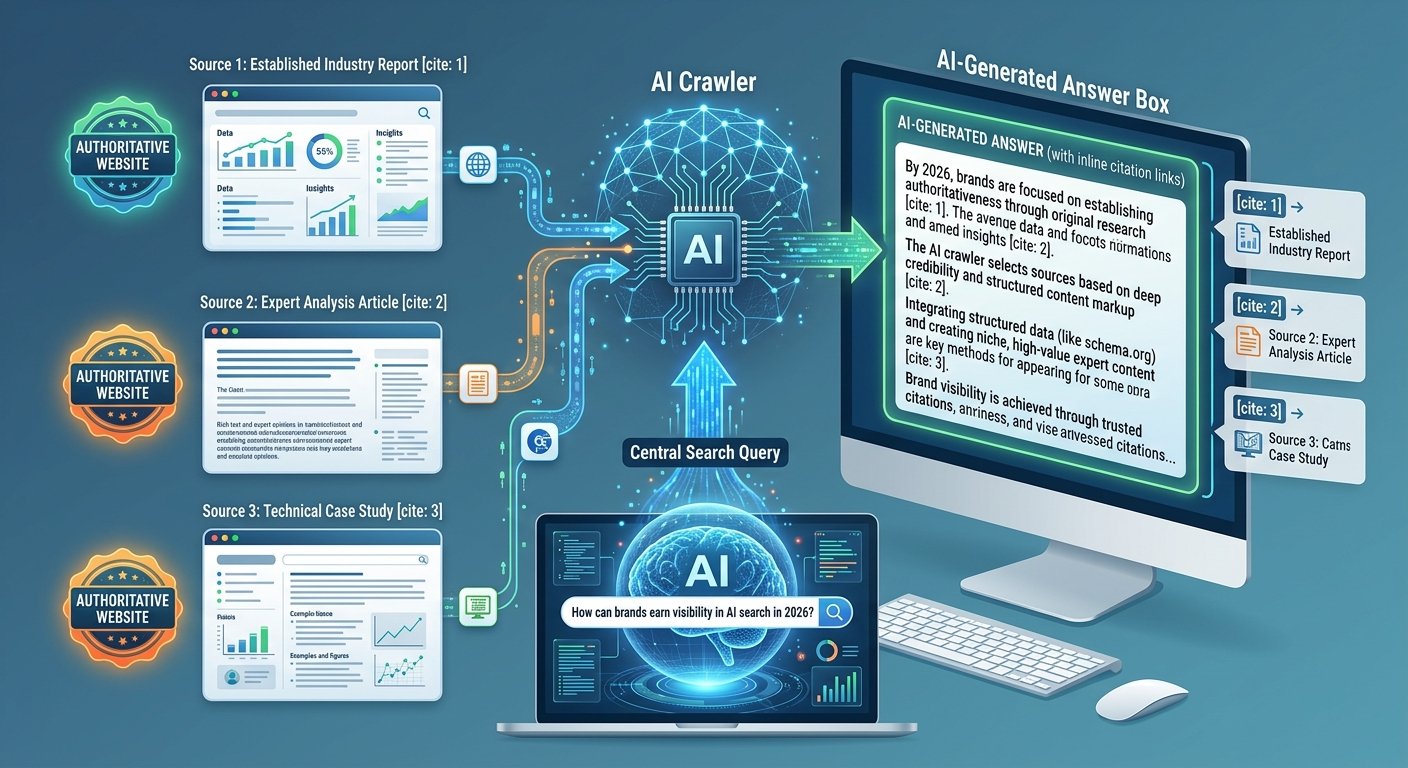

Generative engine optimization is the work of getting your business named and recommended inside AI answers, the kind ChatGPT, Perplexity and Google AI Overviews now put in front of people before any list of links. Your customers are still searching. They are just reading a summary first, and often not clicking at all. This guide explains why that shift matters for a local business and gives you seven proven steps for 2026.
It is aimed at Ontario owners and marketers who already do some SEO and want to know what to change now that answers, not links, win attention.
Why generative engine optimization matters now
The scale is real. OpenAI reports that ChatGPT passed roughly 800 million weekly users, and Google AI Overviews now appear on about a quarter of United States searches. Zero-click behaviour, where the searcher gets an answer without visiting a site, has reached close to 60% of Google queries.
That changes where visibility lives. Ahrefs found that when an AI Overview appears, the click-through rate for the top organic result falls by about 58%. At the same time, the traffic AI does send is unusually valuable: Gartner data shows AI-referred visitors convert at roughly 4.4 times the rate of standard organic search. You can see the click-loss numbers in Ahrefs’ research, and OpenAI publishes its usage figures on the OpenAI site.
GEO, SEO and AEO, briefly
SEO aims to rank a page in the list of results. Answer engine optimization, or AEO, and generative engine optimization, or GEO, aim to get your brand quoted inside the answer itself. The terms AEO and GEO are used almost interchangeably. The practical shift is the same either way: you are no longer only trying to be found, you are trying to be cited.
This is an opening for smaller businesses. By one 2026 estimate, only about a third of companies have trained their teams on any of this, so early movers can earn AI visibility before their competitors notice the channel exists.
Generative engine optimization: 7 steps for local businesses
Here is a practical order to work through.
- Answer real questions clearly. Write the direct answer in the first sentence under each heading, the way you would say it out loud. AI systems lift clean, self-contained answers far more readily than buried ones.
- Add structured data. LocalBusiness, FAQ and Service schema help AI systems understand who you are, what you offer and where you operate. It is one of the clearest signals you can send.
- Make your identity consistent. Use the same business name, address and phone number everywhere, and keep your Google Business Profile complete. AI answers lean on well-defined entities, and inconsistency confuses them.
- Earn third-party mentions. Citations in directories, reviews and local press carry weight because AI systems treat outside confirmation as trust. Being talked about elsewhere matters as much as what you publish yourself.
- Back claims with sources and dates. Content with specific numbers, named sources and recent dates gets cited more often than vague copy. Freshness and evidence read as reliability.
- Keep the site clean and crawlable. Fast pages, sensible headings and no blocking of AI crawlers you want to reach you. If a system cannot read your page, it cannot quote it.
- Measure your AI visibility. Ask ChatGPT and Perplexity the questions your customers ask, and note whether you appear. Track AI referral traffic in your analytics so you know if the work is landing.
What to measure
Traditional rankings tell you less than they used to. Watch three things instead: how often you show up when you query the AI tools directly, how much referral traffic arrives from AI platforms in your analytics, and whether branded searches for your business are rising. Those signals tell you whether generative engine optimization is working.
A simple 30-day start
You do not need a large project to begin. In the first week, list the ten questions your customers actually ask and write a clear, direct answer to each on your site. In the second week, add LocalBusiness and FAQ schema and tidy up your Google Business Profile.
In the third week, put those ten questions to ChatGPT and Perplexity, and note where you appear and where a competitor shows up instead. In the fourth, chase two or three third-party mentions, a directory listing, a review, or a local article, to build the outside signals AI systems trust.
That month of work puts a small business ahead of most competitors on generative engine optimization, and it gives you a baseline to measure against as AI search keeps growing.
Generative engine optimization: common questions
What is generative engine optimization?
Generative engine optimization is the work of getting your business named and recommended inside AI answers from tools like ChatGPT, Perplexity and Google AI Overviews, rather than only ranking in the list of links.
Is generative engine optimization different from SEO?
It builds on SEO. Generative engine optimization focuses on being cited in the answer itself, using clear direct answers, schema and third-party mentions, while SEO focuses on ranking a page.
How do I start with generative engine optimization?
Answer your customers’ real questions clearly, add structured data, keep your business details consistent, and earn outside mentions. That is the core of generative engine optimization for a local business.
Generative engine optimization is a head start, not a gamble
None of this replaces good SEO. It extends it. The pages that earn AI citations tend to be the same ones that answer questions well, load fast and carry real evidence, so the work compounds with everything else you do for search.
The main risk is waiting. AI search is growing every quarter, and the businesses that show up in answers now are teaching these systems to trust them. If you want help getting cited, start on the Webtech Analyst homepage, or see how we combine search and AI visibility on our services page.